
Dubai has quietly turned itself into one of the busiest corporate event capitals in the region. On any given week, hotels along Sheikh Zayed Road host product launches, DIFC hosts investor briefings, and Expo City hosts training summits with delegates flying in from three continents. According to the Dubai World Trade Centrethe emirate hosts hundreds of large-scale business events every year, and that figure keeps climbing as the UAE positions itself as a MICE hub between Europe and Asia.
For the companies actually running these events, the visible part (the speakers, the branding, the coffee) is the easy part. The unglamorous work sits underneath: sourcing enough chairs that match, finding a stage that arrives on time, making sure the sound system actually reaches the back row. That is where rentals earn their keep, and where most first-time organisers underestimate the effort involved.
The market
Why corporate events in Dubai run on rentals
Very few Dubai businesses own the furniture and AV kit they need for a 300-person conference. It would sit unused for 51 weeks of the year, take up warehouse space that costs real money, and go out of style within two seasons. Renting is not just cheaper, it is the sensible operating model for a city where events scale up and down constantly.
The other reason is variety. A private board dinner in Downtown, a training day in a JLT office, and a launch event on a Palm Jumeirah beach club all need different looks. Rentals let you match the venue and the audience without committing to one style of chair for life.
The four corporate event formats you will plan most often
Conferences
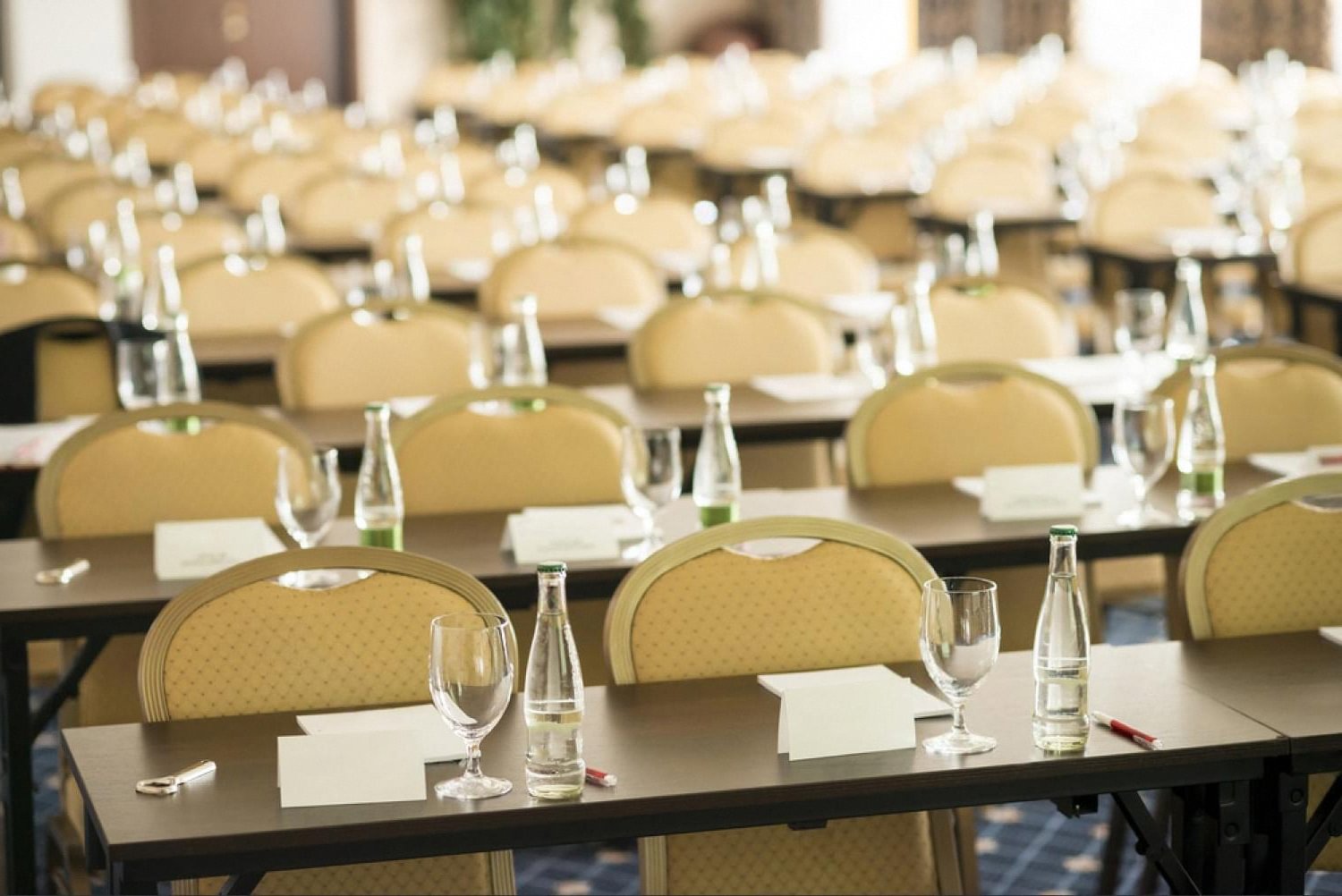
Multi-hour or multi-day sessions with a fixed audience, usually theatre or classroom seating. Heavy on AV, registration flow, and breakout furniture.
Product launches
Shorter, more theatrical. Stage lighting, a hero screen, cocktail seating, and a strong photography brief for the PR team.
Training and workshops
Smaller groups, longer hours. Comfortable chairs, writing tables, breakout pods, and reliable projectors matter more than lighting drama.
Networking evenings
Standing height tables, lounge clusters, a small stage for a five-minute welcome speech, and background sound rather than a full PA rig.
Checklist
The equipment and furniture list that actually matters
Every organiser eventually builds their own master list. If you are starting from scratch, this is the core inventory you should be pricing before you sign a venue contract.
- Chairs (theatre, banquet, cocktail, and a spare stack of 10 percent)
- Tables (rounds, classroom rectangles, cocktail highs, registration desks)
- Stage decks, stairs, and skirting
- Podium or lectern with a wired mic
- Projectors and LED screens sized to the room
- Sound system with wireless handhelds and lapels
- Cabling, power distribution, and clean extension runs
A realistic planning timeline
Dubai suppliers are busy. During peak season (October to April), the best rental fleets get booked out weeks in advance, especially around GITEX, Arab Health, and Dubai Airshow windows. Working backwards from the event date is the only sane way to plan.
- 12 to 8 weeks out. Lock the venue, confirm the guest count range, and start sketching the floor plan. This is when you approach furniture and AV vendors for holds.
- 8 to 4 weeks out. Sign vendor contracts. Book your photographer, videographer, and any specialist crew. If you need a professional shooter for the launch, arrange photographer hire dubai at this stage rather than the week before.
- 4 to 2 weeks out. Final numbers, final furniture counts, catering guarantees, and a proper run sheet. Walk the venue with your AV lead.
- 72 hours out. Rehearsal, tech check, and a printed contact list for every supplier.
- Event day. Load-in usually starts 6 to 12 hours before doors. Build a buffer, Dubai traffic will eat your schedule if you don’t.
There is a temptation to squeeze the timeline because Dubai suppliers can technically deliver overnight. They can, but the price and the risk both climb sharply.
Give suppliers a full working week between the final count and the event, and you will get better chairs, better cabling, and a calmer setup crew.

Budgeting without surprises
Corporate event budgets in Dubai swing wildly depending on the venue. A basic training day for 40 people at a serviced office can run under AED 15,000 all-in, while a launch event with staging, LED walls, and premium furniture at a five-star hotel can easily cross AED 250,000.
The line items to watch, in order of how often they blow the budget:
- AV and stagingusually 30 to 45 percent of total spend
- Furniture rentals10 to 20 percent depending on style
- Venue and F&B minimumsdriven by the venue contract
- Logistics and manpoweralways higher than the first quote
- Contingencykeep 10 percent untouched until load-out
Common mistakes Dubai organisers keep making
After enough events, the same problems show up. None of them are exotic, all of them are avoidable.
- Poor seating choices. Beautiful chairs that are unusable after 90 minutes will ruin a full-day conference. Test the chair yourself before you book 300 of them.
- Insufficient power. Ballrooms in older Dubai hotels run out of clean power fast. Ask your AV vendor for a load calculation and add distro boxes if needed.
- Last-minute bookings. Same-week orders in peak season get whatever is left in the warehouse, which is rarely what you actually wanted.
- Ignoring the load-in route. If the venue lift is small or the loading bay closes at 6pm, your 8pm delivery is not happening. Ask.
- No spare inventory. Always rent 10 percent more chairs than your final RSVP. Walk-ins happen, and empty rows look worse than tight ones.
The best corporate events in Dubai are the ones where nothing looks rented, because everything was.
By the numbers
Why the UAE keeps investing in business events
The scale of the local events industry is the reason the rental market is so mature. The UAE hosts a significant share of the region’s exhibitions and conferences, and Dubai alone runs some of the largest trade shows in the world, including GITEX Global and Arab Health.
That density of business events supports thousands of specialised vendors, from furniture rental yards in Al Quoz to AV houses in Dubai Investments Park. For an organiser, it means you rarely have a supply problem. You have a coordination problem, which is a much better one to have.
Putting it together
Corporate event planning in Dubai rewards the organisers who treat rentals as a design decision rather than a purchasing chore. Match the furniture to the audience, brief the AV team like a partner rather than a courier, and give yourself a proper timeline. The events that feel effortless from the audience side are almost always the ones where the planner started early, asked boring questions, and left a real contingency in the budget.
Get those three habits right and the rest, the branded backdrop, the coffee break flow, the applause at the closing session, tends to follow on its own.
Frequently asked questions
How far in advance should I book furniture and AV rentals for a Dubai corporate event?
For events between October and April, aim to lock suppliers 6 to 10 weeks before the date. Peak season fills the best fleets quickly, especially during GITEX, Arab Health, and Dubai Airshow windows.
Off-peak, 3 to 4 weeks is usually enough for standard furniture and AV, though anything custom (LED walls, branded staging, bespoke lounge sets) still needs a longer lead time.
What is a realistic budget for a mid-size corporate event in Dubai?
A 100 to 150 guest conference at a four-star hotel with standard AV and furniture rentals typically lands between AED 60,000 and AED 120,000, excluding food and beverage minimums. Product launches with heavier staging and lighting can double that figure.
Keep at least 10 percent of the budget as untouched contingency until after load-out, last-minute additions on event day are the single biggest source of overspend.
Do rental companies in Dubai deliver, install, and dismantle everything themselves?
Most established vendors quote a turnkey service that includes delivery, setup, on-site crew during the event, and dismantle. Confirm this in writing, some cheaper quotes exclude installation labour, and you only discover that when a truck of chairs arrives at your loading bay.
Also confirm load-in and load-out windows with your venue before signing, hotel loading bays in Dubai often have strict operating hours.
What is the difference between renting from a furniture supplier and a full event production company?
A furniture rental supplier delivers the physical items: chairs, tables, sofas, bars. A full production company coordinates furniture, AV, staging, lighting, and crew as one contract. For events over 200 guests, a production partner usually saves time and reduces the number of things that can go wrong.
For smaller boardroom sessions or training days, dealing directly with the furniture yard and a separate AV supplier is often cheaper.
Do I need permits for a corporate event in Dubai?
Most private corporate events held inside licensed hotels or business centres do not require an additional permit, the venue’s own license covers the activity. Events with a public audience, ticket sales, media presence, or outdoor components typically need clearance from the relevant Dubai authority.
Check with your venue’s events team early, they will tell you exactly which permits, if any, apply to your format.
How many extra chairs should I rent beyond my confirmed guest count?
Add roughly 10 percent to your final RSVP number. Walk-ins, plus-ones, and last-minute VIPs are common at Dubai corporate events, and a partly filled front row looks far better than a packed back with people standing.
For networking formats where people move around, you can go lighter, around 60 to 70 percent seating capacity of the total headcount is usually enough.